"They're great athletes. They work all their lives for our entertainment, and in some cases they make people very wealthy. And, at the end of the line, they don't have any social security or a 401K plan. And they should, because they earned all the money.... Some people go to the racetrack and don't even bet. They're just overwhelmed by the majesty of the performance. They did it. Without [these horses] there's nothing. There's no bluegrass, there's no racetracks... they are the essence of it."
I read Michael Blowen's quote, and it resonated deeply with me. Michael Blowen is the former film critic for the Boston Globe, and the Founder and President of Old Friends, a retirement and rescue facility for pensioned thoroughbreds.
Old Friends is a thoroughbred retirement with a difference, giving home to stallions and more recently, to mares. The plan to provide "at risk" racehorses (horses too old to race or breed) with the dignified and humane retirement they deserve, was born from the shocking death of Kentucky Derby winner Ferdinand in a slaughterhouse in Japan in 2002. Like many, Michael Blowen was beyond appalled that something like that could happen.
Old Friends is located in Georgetown, Kentucky. Realizing that promoting these celebrated horses through a campaign of education and tourism would draw attention to the plight of racehorses and equines in need, Old Friends is open to the public. Tours are available, and the list of stallions and horses who call their fields and barns homes is humbling and impressive, the memorials and tributes to fallen heroes incredibly touching.
Everyone who visits goes to see the once great horses who battled their way down the homestretch to bring fame and fortune to owners, trainers, and jockeys. Each one leaves touched by the beauty, dignity, courage and heart these thoroughbred heroes have.
He was the little horse with the big heart, Athlete of the Year, the first Canadian horse to win the Kentucky Derby, a sire of sires, a Canadian hero. When I was a little girl, dreaming about breeding the first filly to win the triple crown, I knew the Northern Dancer bloodline would help me achieve my goal.
He was so small that when he was auctioned for sale at the Canadian yearling sales, he failed to raise the $25,000 reserve bid. As a result, he stayed with E.P. Taylor's Windfields Farms. Ron Turcotte and Bill Shoemaker both rode him, but it was Bill Hartack who rode him to victory in the 1964 Kentucky Derby, the Preakness, and in the Queen's Plate.
In his two years of racing, Northern Dancer won 14 of his 18 races, and never finished worse than third (he was third in the Belmont Stakes). He stood at stud at Windfields Farm in Oshawa until 1969, then moved to Windfields' Maryland farm. Considered to be the greatest sire of the 20th century, Northern Dancer sired 147 stakes winners, including Nijinsky II, winner of England's Triple Crown.
He won the American Eclipse Award as three-year old male champion in 1964, and the Sovereign Award for Horse of the Year. In 1965, he became the first horse to be inducted into Canada's Sports Hall of Fame, an honour he held until 1996, when show jumper Big Ben joined him. He was part of the first group of inductees into the Canadian Horse Racing Hall of Fame, and was induced into the National Museum of Racing and Hall of Fame in 1976. In 1999, Canada Post honoured him with an image on a postage stamp, and a life-size bronze statue immortalizes him outside Woodbine Race Track in Toronto.
In the 1980s, his stud fee reached US $1M; at the 1983 Keeneland Sales
his son, Snaafi Dancer, became the first yearling to sell for $10M. He retired from stud on April 15, 1987 at the age of 26, and died three years later at the age of 29. His remains were brought back to Canada for burial at Windfields Farm in Oshawa, Ontario.
Windfields Farm was a six square kilometre (1,500 acre) thoroughbred breeding farm founded by E.P. Taylor in Oshawa, Ontario. Horses owned by Windfields Farm have won 11 Queen's Plat races, the Kentucky Derby and the Preakness Stakes. Their horses have won the Canadian Triple Crown twice. A world-record 48 champions and 360 stakes winners were bred at the farm. In 2008, Canadian Hall of Fame jockey Sandy Hawley trained at Windfields Farm before coming back to win the Living Legends Race aboard Tribal Chief.
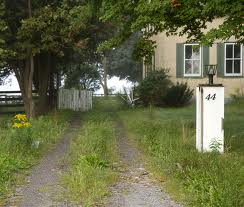
In 1989, following the death of E.P. Taylor, Windfields Farm was downsized, with large portions of land being sold to the University of Ontario Institute of Technology and Durham College. Housing developments replaced other farm lands, and the estate devolved into a small, private farm. In 2009, the breeding operation officially folded, and the bulk of the remaining property was sold to real estate developers. Some of the farm's historic barns, the grave of Norther Dancer, and a trillium forest where fifteen horses (including Archers Bay, Canadiana, New Providence, Northern Dancer, South Ocean, Vice Regent, Victoria Park and Windfields) are interred, were to be preserved as a commemorative park.
But the University of Ontario Institute of Technology and the City of Oshawa, who have agreed to maintain these buildings, the forest, and the memories, have failed to uphold their commitment. A proposal is now before the City of Oshawa to designated the farm a heritage site.
Northern Dancer was a great athlete, the head of a dynasty that changed horse racing, and a great Canadian. Windfields Farm, in its day, garnered international attention as a breeding operation. On a day when many are celebrating renewal and new life, it is doubly tragic that Windfields Farm, Northern Dancer's resting place is abandoned. My battle cry? Help save Windfields Farm!
To help save Windfields Farm, please send a letter to the City of Oshawa (clerks@oshawa.ca). A copy of a letter, along with more details about Windfields Farm, can be found at http://savewindfields.com.
98 years ago today, Woodford (Woody) Cefis Stephens was born in Stanton, Kentucky. Elected into the National Racing Museum Hall of Fame in 1976, Stephens' career in thoroughbred racing spanned seven decades. He ran Cain Hoy Stable for Harry Guggenheim for 10 years, trained seven Eclipse Award winning race horses, five kentucky Oaks winners, two Kentucky Derby winners (Cannonade '74, Swale '84), a Preakness winner (Blue Man '52), and an unprecedented five straight Belmon Stakes winners (Conquistador Cielo '82, Caveat '83, Swale '84, Creme Fraiche '85 and Danzig Connection in '86). In 1983, he won the Eclipse Award as the top trainer in the United States.
As a young racing fan, I spent hours glued to the television watching the Derby, the Preakness, the Belmont, the Queen's Plate, and any other race that was televised. I poured over a friend's father's racing sheets and stud books, tracked races through the newspaper, learned about handicapping. I studied bloodlines, lineage, genetics and picked the horses from the racing sheets in the Globe and Mail that I thought would win, place or show, based on that magical combination of bloodline, talent, rider, trainer and heart, and my own applied "knowledge". It was a passion that, for a while, bordered on obsession, and my goal ultimately became to breed and own the first filly to ever win the Triple Crown. Woody Stevens was a part of the dream team I wanted to assemble to help me on this quest, along with my long-time hero, racing legend Sandy Hawley. With a great filly, and those two in her court, I was confident it would become a reality.
The dream still lives on, and today it seems fitting to remember the dream, and pay tribute to one of the men who figured so prominently in it.