Stay tuned!

Showing posts with label Horse of the Year. Show all posts
Showing posts with label Horse of the Year. Show all posts
Wednesday, February 13, 2013
Good riding is all about getting out of your horse's way
The best riders use their aids to help their horses be as brilliant as they can be. And then, these riders get out of their horses' way.
Nick Skelton's ride on Heracross demonstrates the beauty and simplicity of control and communication. Skelton really knows how to help his horse, and stay out of his way. So much so, that watching it leaves me thinking to myself, "I could do that course".
Stay tuned!
Stay tuned!


Tuesday, October 9, 2012
The Story of Snowman ~ Every horse deserves a chance
"Some horses you “ride” to victory.
Others find victory on their own - you just have to hold still and go along for the ride."
Others find victory on their own - you just have to hold still and go along for the ride."

Does anyone remember Snowman, the show jumper who launched Harry de Leyer's career? De Leyer found Snowman at auction in Pennsylvania. Then, he was an 8-year old Amish plough horse sent for slaughter. De Leyer, looking for a school horse, arrived late at the auction - just as the "dregs" of the auction were being loaded onto the kill buyer's truck. The horse's eyes met De Leyer, and he was purchased off the truck for $80.
Snowman (as he was renamed), went to work in the riding school. He was a barn favourite, adored by the De Leyer children. A year after his purchase, De Leyer sold him to a neighbouring doctor, who was looking for a horse for his daughter. It seemed like a perfect fit: a forever, loving home for Snowman, and a 100% profit for De Leyer.

Snowman had other ideas. He believed he had found his forever home with De Leyer, and was not going to take no for an answer. A few days after the sale, De Leyer received a call from the doctor saying the horse had jumped out of his paddock, and was in a neighbour's yard. Snowman was returned to the doctor, but he continued to escape, finally jumping his paddock fence, and every obstacle in his path, across the six miles that separated his new home from the De Leyer's farm.

It turns out that De Leyer had not bought a school horse. He had bought a show jumper and a personality. And while his early training was hardly auspicious (Snowman pretty much decimated small jumps and cavaletti), once De Leyer pointed him to what Snowman considered a real jump, his passion appeared. Two years after he was saved from slaughter, Snowman and De Leyer won the jumper championship at the National Horse Show at Madison Square Garden, and Snowman became the American Horse Shows Association Horse of the Year. In the five years Snowman and De Leyer competed at an international level, they won many top competitions and titles. And they captured peoples' hearts. Snowman appeared on both the Johnny Carson and Dick Cavett shows, in an episode of To Tell the Truth. He was the subject of two children's books (The Cinderella Horse, by Tony Palazzo,1962; and Snowman, Rutherford Montgomery, 1967), and of the impressive The Eighty Dollar Champion: Snowman, the Horse that Inspired a Nation, by Elizabeth Letts, 2011.
Snowman lived out his life with De Leyer, and was humanely euthanized at the age of 26 following complications due to kidney failure. In 1992, he was inducted into the National Show Jumping Hall of Fame. The Breyer model of him is now a collectors item.
Last summer, Elizabeth Lett's book about Snowman was published. Now, director and producer Ron Davis is looking to make a documentary about Snowman and De Leyer. He feels that the story stands the test of time. "When you looked at Harry and Snowman on paper in the 1950's, neither were destined for greatness. But they came together, there is no other word to describe them other than inspiring."
Lett's book and Davis' pending documentary are incredibly timely. It's a story of success in the face of horrible fate. In a time of rising costs, the tremendous influx of horses into an already saturated marketplace, increased awareness of and the call to ban horse slaughter and the culling of wild horses, the story of Snowman carries some valuable lessons:
"First, be fair, and don’t be so tough on your horse," De Leyer says. "You can get more done with carrots and petting them than with being so tough. Snowman went in a rubber D-bit, and I school all the horses in a rubber D-bit. I am lucky with horses, but this is part of my luck – to be nice to horses and nice to people. Then also, don’t give up too quick on yourself. There is always a chance to get there, so give yourself a chance. Give every horse a chance."
Snowman is another great reminder of the success you can find if you give a horse the chance.
Credits go to "The Eighty Dollar Champion: Snowman, the Horse that Inspired a Nation" (Elizabeth Betts, 2011)
http://www.threerunsplantation.com/newsletters/equestrian_news2.asp?newsletter=6&page=24
http://www.horse-canada.com/horses-and-history/snowman-the-ultimate-rags-to-riches-story/
Sunday, April 8, 2012
Help Save Windfields Farm!
"They say the north wind was tangled in his mane"
He was the little horse with the big heart, Athlete of the Year, the first Canadian horse to win the Kentucky Derby, a sire of sires, a Canadian hero. When I was a little girl, dreaming about breeding the first filly to win the triple crown, I knew the Northern Dancer bloodline would help me achieve my goal.
He was so small that when he was auctioned for sale at the Canadian yearling sales, he failed to raise the $25,000 reserve bid. As a result, he stayed with E.P. Taylor's Windfields Farms. Ron Turcotte and Bill Shoemaker both rode him, but it was Bill Hartack who rode him to victory in the 1964 Kentucky Derby, the Preakness, and in the Queen's Plate.
In his two years of racing, Northern Dancer won 14 of his 18 races, and never finished worse than third (he was third in the Belmont Stakes). He stood at stud at Windfields Farm in Oshawa until 1969, then moved to Windfields' Maryland farm. Considered to be the greatest sire of the 20th century, Northern Dancer sired 147 stakes winners, including Nijinsky II, winner of England's Triple Crown.
 He won the American Eclipse Award as three-year old male champion in 1964, and the Sovereign Award for Horse of the Year. In 1965, he became the first horse to be inducted into Canada's Sports Hall of Fame, an honour he held until 1996, when show jumper Big Ben joined him. He was part of the first group of inductees into the Canadian Horse Racing Hall of Fame, and was induced into the National Museum of Racing and Hall of Fame in 1976. In 1999, Canada Post honoured him with an image on a postage stamp, and a life-size bronze statue immortalizes him outside Woodbine Race Track in Toronto.
In the 1980s, his stud fee reached US $1M; at the 1983 Keeneland Sales his son, Snaafi Dancer, became the first yearling to sell for $10M. He retired from stud on April 15, 1987 at the age of 26, and died three years later at the age of 29. His remains were brought back to Canada for burial at Windfields Farm in Oshawa, Ontario.
 Windfields Farm was a six square kilometre (1,500 acre) thoroughbred breeding farm founded by E.P. Taylor in Oshawa, Ontario. Horses owned by Windfields Farm have won 11 Queen's Plat races, the Kentucky Derby and the Preakness Stakes. Their horses have won the Canadian Triple Crown twice. A world-record 48 champions and 360 stakes winners were bred at the farm. In 2008, Canadian Hall of Fame jockey Sandy Hawley trained at Windfields Farm before coming back to win the Living Legends Race aboard Tribal Chief.
In 1989, following the death of E.P. Taylor, Windfields Farm was downsized, with large portions of land being sold to the University of Ontario Institute of Technology and Durham College. Housing developments replaced other farm lands, and the estate devolved into a small, private farm. In 2009, the breeding operation officially folded, and the bulk of the remaining property was sold to real estate developers. Some of the farm's historic barns, the grave of Norther Dancer, and a trillium forest where fifteen horses (including Archers Bay, Canadiana, New Providence, Northern Dancer, South Ocean, Vice Regent, Victoria Park and Windfields) are interred, were to be preserved as a commemorative park.
But the University of Ontario Institute of Technology and the City of Oshawa, who have agreed to maintain these buildings, the forest, and the memories, have failed to uphold their commitment. A proposal is now before the City of Oshawa to designated the farm a heritage site.
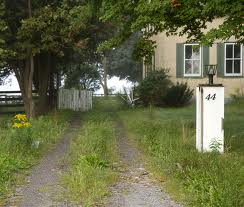
Northern Dancer was a great athlete, the head of a dynasty that changed horse racing, and a great Canadian. Windfields Farm, in its day, garnered international attention as a breeding operation. On a day when many are celebrating renewal and new life, it is doubly tragic that Windfields Farm, Northern Dancer's resting place is abandoned. My battle cry? Help save Windfields Farm!

To help save Windfields Farm, please send a letter to the City of Oshawa (clerks@oshawa.ca). A copy of a letter, along with more details about Windfields Farm, can be found at http://savewindfields.com.
Subscribe to:
Posts (Atom)